Key Takeaways
- Relativity FOIA is now generally available– a complete FOIA software solution that brings records request intake, case management, AI-supported review, disclosure, and reporting into one connected workflow inside RelativityOne Government.
- The bottleneck in modern FOIA work isn't the request itself; it's everything after. Most agencies still manage FOIA across a patchwork of software: intake portals, spreadsheets, separate review tools, and manual reading-room exports. Every handoff multiplies labor and risk.
- Defensibility, not just speed, is the real test. Relativity FOIA surfaces every prioritized record with a confidence score, explanation, counterpoint, and supporting citations, and humans make every final determination.
- Every release becomes searchable precedent. Through the Disclosure Center and Reading Room, prior releases reduce repeat review, improve consistency across similar requests, and make the next request faster than the last – turning institutional history into operational advantage.
There once was a dream: a disclosure system that actually worked, end to end. From the moment a public records request arrives to the moment a record is in the public's hands, this platform would facilitate a single connected workflow – no duct tape between the pieces, no moment where a dedicated professional would be limited by technology as they tried to do the job they were hired to do.
I spent more than fifteen years working for the federal government, starting as an enforcement attorney at EPA. I built and led an e-discovery division. I managed Freedom of Information Act responses via FOIAonline. In every one of those roles, I saw the same gap – not in the people, who were exceptional, but in the infrastructure underneath them. The systems just weren't built for the mission, so the mission had to work around the systems.
Today, that changes.
Relativity FOIA is now generally available inside RelativityOne Government, bringing intake, case management, defensible artificial intelligence review, disclosure, and reporting into a single, connected workflow.
The Vision Behind the Build
When I think about what FOIA technology could be – what it should be – I think about a system of action and a system of record.
A system of record securely holds crucial data, which tells the story of what happened. A system of action shapes what happens next. It helps teams learn from each case. It makes the next one faster, more consistent, more defensible. It turns history into an asset instead of overhead.
That distinction drove Relativity FOIA’s design. We built it with Natasha Jones, who led FOIA technology, reporting, compliance, and training for the Department of the Interior's decentralized program, and Lindsay Steel, who served as chief of the FOIA Compliance Staff at DOJ's Office of Information Policy. Their experience was our architecture. The questions they answered – about statutory clocks, about exemption consistency, about what an appeal looks like from the inside – shaped what the product does.
An Advance Access program running since February 2026 has put working FOIA professionals inside our development cycle. What they told us is what any experienced practitioner already knows: the bottleneck isn’t the request itself, but everything that comes after it.
A Connected Workflow, From Request to Release
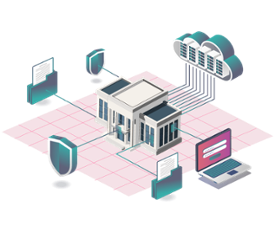
In Relativity FOIA, four connected modules carry a case from request to release:
- Request Portal and Case Management capture requests across intake channels, validate required information, support identity and fee workflows, and start the statutory clock the moment a request is perfected. Work routes into RelativityOne Government with ownership, due dates, and status visibility from day one.
- Review, Search, and Redaction is the secure environment where complex disclosure work happens: collection, processing, search, responsiveness review, exemption application, redaction, and release preparation, all in one governed workspace. AI surfaces and explains likely responsive material. Humans make every final determination, and actions are logged.
- Disclosure Center and Reading Room is where the design pays off most clearly. When review is complete, the Disclosure Center assembles release packages from the same documents, redactions, and determinations created during review – no export, no reformatting, no separate chain of custody to manage. Records, when applicable, publish directly to a public-facing Reading Room. Every release becomes searchable precedent, so the next similar request gets a head start. Past work becomes institutional knowledge.
- Reporting and Analysis generates the quarterly and annual FOIA Report metrics agencies need, directly from structured case data, eliminating the year-end work of reconstructing activity across spreadsheets and exports. Dashboards surface backlog, deadline risk, and cycle times, giving program leads a live view of the docket.
The result is a faster, more repeatable, more defensible process.
AI That Earns Its Place
Volume alone has largely settled the question of whether AI should be used in FOIA responses. Still, whether the AI can stand up to oversight, appeals, litigation, and the Inspector General who will review the record 18 months from now without the context of the original decision remains top of mind for many agencies.
Especially when it comes to AI, FedRAMP should be the beginning of the conversation. Next, agencies should be asking vendors: How does the model explain what it surfaced? What happens to agency data? How are outputs tested? How do humans stay in control when the stakes are highest?
Relativity FOIA was built to answer those questions directly. Every prioritized record arrives with a confidence score, an explanation, a counterpoint, and supporting citations. Reviewers can see exactly why the model surfaced what it surfaced before making any determination. All prompts, results, and interactions are logged and remain within the Azure Government boundary. Agency data is not used to train underlying models.
The People Still Hold the Light
None of this works without the right people.
The FOIA analysts, records officers, attorneys, IT specialists, and program managers who touch every disclosure request are the ones keeping government visible and accountable. They operate under deadlines that don't move, with data volumes that keep growing, and public expectations that have never been higher. No technology changes that. What technology can do is stop making their jobs harder than they have to be.
For fifteen years, I watched dedicated professionals carry the weight of the mission on infrastructure that wasn't designed to carry it with them. The tools fragmented the workflow. The workflow fragmented the record. And the record – the thing that had to stand up to scrutiny, to appeal, to oversight, to time – was only as strong as the patchwork underneath it.
That gap is closable. Relativity FOIA is ready to help.
Looking Ahead
Imagine a journalist submitting a FOIA request and receiving a response in days, not months. Imagine a repeat requester finding that the record they need is already in a public Reading Room, searchable, downloadable, and linked to related releases, because an earlier request already produced it. Imagine a world where many requests never need to be filed at all, because the information is already online and accessible.
That's the direction Relativity FOIA is built to travel. Every release that flows into the Reading Room can make the next one faster. Every consistent exemption decision can reduce the risk of inconsistency down the line. Every real-time dashboard that surfaces a looming deadline gives a program lead the chance to act before the deadline acts on them. Good infrastructure compounds. A FOIA program that runs on it gets better as it gets bigger.
Democracy shines in the light. Sixty years in, FOIA demands technology that understands the mission. Relativity FOIA is designed to deliver AI-powered speed, human-centered judgment, and defensible transparency at the scale today's landscape requires. And we're just getting started.
Graphics for this article were created by Natalie Andrews.